
|
 |
 |


 |
 |
|
|
Friday, August 22, 2008
The tenting section of the Lake Louise campground in Banff National Park now has an electric fence surrounding it. The decision to try such a fence was made after repeated people/bear encounters that did not go well.
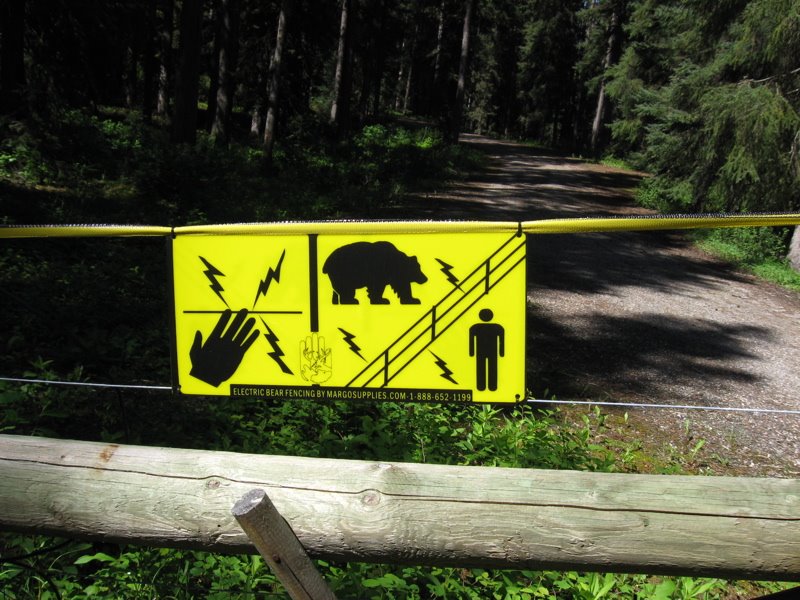 Many visitors to national parks (in both Canada and America) don't take the "Don't Feed The Wildlife" signs seriously. Some mean well, thinking the bears or other wildlife must be starving. Others feed wildlife to get close enough to get a photograph. But most just don't think about it. People feed wildlife directly and even indirectly, by leaving a dirty campsite with coolers, stoves, and dirty dishes strewn about. The odors attract the bears, who tear into the coolers or eat food scraps or anything with a smell, including toothpaste and other toiletries. Bears are incredibly smart. Even if the cooler is empty, through experience they know it's a food storage device and will tear into it anyway. Many visitors to national parks (in both Canada and America) don't take the "Don't Feed The Wildlife" signs seriously. Some mean well, thinking the bears or other wildlife must be starving. Others feed wildlife to get close enough to get a photograph. But most just don't think about it. People feed wildlife directly and even indirectly, by leaving a dirty campsite with coolers, stoves, and dirty dishes strewn about. The odors attract the bears, who tear into the coolers or eat food scraps or anything with a smell, including toothpaste and other toiletries. Bears are incredibly smart. Even if the cooler is empty, through experience they know it's a food storage device and will tear into it anyway.This habituation of wildlife has many bad consequences. Human food is disastrously unhealthy for wildlife, and can weaken their systems, leading to malnutrition and death. Bears get used to being around humans. They get hit on the road after being repeatedly fed out of car windows. And when they start seeing humans as a food source, that is when dangerous encounters happen. People get too close to the bears, the bears get agitated, and people (and bears) get hurt. Bears who repeatedly return to human-populated areas searching for food and garbage become "problem bears," and are relocated. If they keep coming back, the bears are killed. So people who think they are doing the bear (or other wildlife) a favor, couldn't be more wrong. The park service has a saying: "A fed bear is a dead bear." To cut down on these incidents, Parks Canada constructed an electrical fence around the tenting section of the Lake Louise Campground. Humans can pass through pedestrian gates, but they are hoping it will keep bears out, and thus protect them from humans who are inadvertently destroying them. 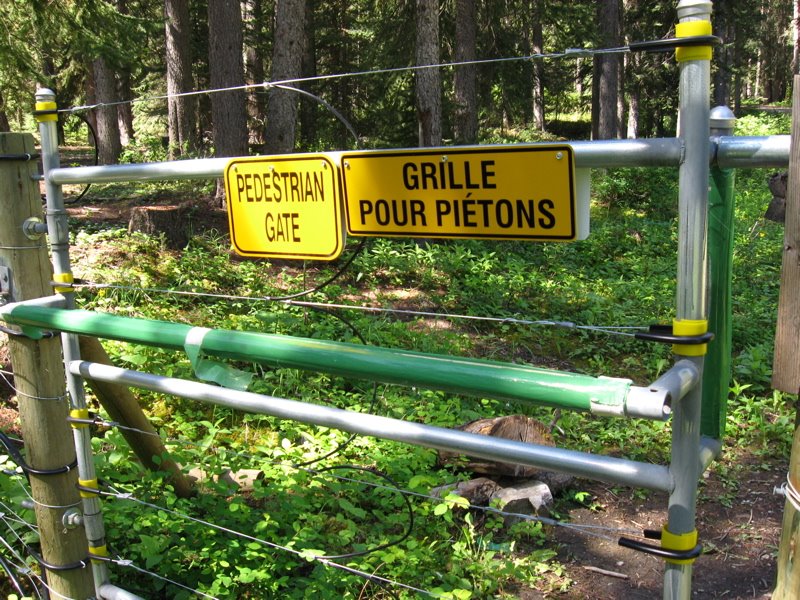 posted 12:49 PM
ArchivesApril 2005 May 2005 September 2005 November 2005 December 2005 March 2006 April 2006 May 2006 June 2006 August 2006 September 2006 October 2006 December 2006 January 2007 March 2007 April 2007 May 2007 June 2007 July 2007 August 2007 September 2007 November 2007 December 2007 January 2008 February 2008 March 2008 May 2008 June 2008 July 2008 August 2008 September 2008 October 2008 November 2008 December 2008 February 2009 March 2009 April 2009 May 2009 June 2009 July 2009 August 2009 September 2009 October 2009 February 2010 May 2010 October 2010 November 2010 February 2011 March 2011 May 2011 June 2011 July 2011 November 2011 December 2011 January 2012 February 2012 April 2012 May 2012 June 2012 July 2012 January 2013 February 2013 May 2013 April 2014 March 2018 April 2018 March 2019
|

